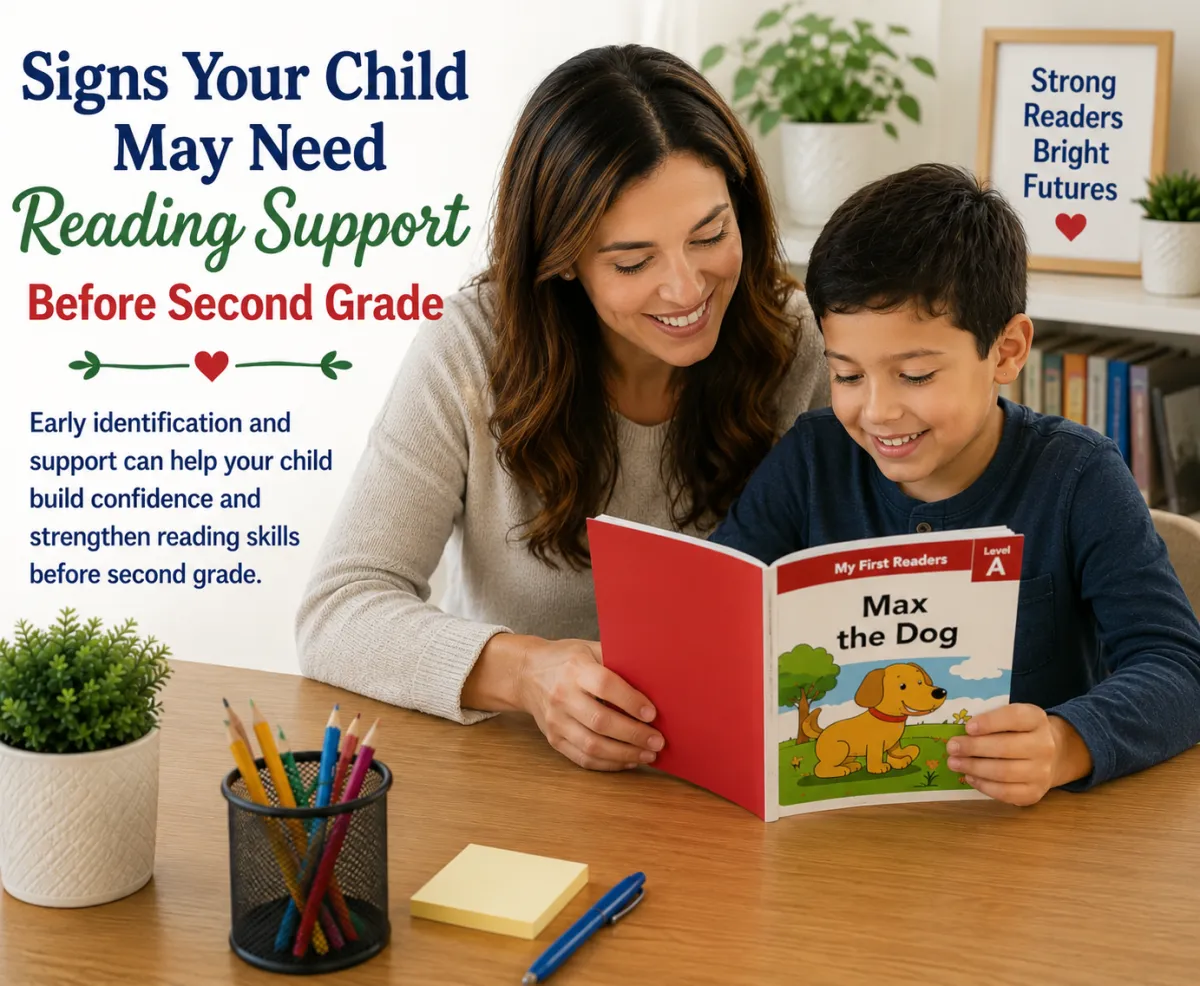
6 Signs Your Child May Need Reading Support Before Second Grade
Parents often wonder whether their child is truly ready for the increased reading demands of second grade. While every child develops at their own pace, some reading challenges may indicate that additional support could be helpful. Identifying concerns early can make a significant difference in a child's confidence and long-term reading success. Here are several signs that your child may benefit from extra reading support before entering second grade.
1. Your Child Avoids Reading
Children who are struggling with reading often begin to avoid it whenever possible. They may complain that reading is boring, become frustrated during homework, or resist reading independently. While not every reluctant reader is struggling, consistent avoidance can sometimes be a sign that reading feels difficult or overwhelming.
2. Your Child Guesses at Words Instead of Sounding Them Out
As children learn to read, they should gradually become more confident in using letter sounds to decode unfamiliar words. If your child frequently guesses based on pictures, the first letter of a word, or context clues alone, they may need additional support in developing phonics and word-reading skills. Strong decoding skills are essential for reading success in second grade and beyond.
3. Reading Still Sounds Slow and Choppy
By the end of first grade, many children are beginning to read simple text with greater fluency. If your child reads word-by-word with frequent pauses or struggles to blend sounds smoothly, reading may still require significant effort. Improving reading fluency helps children focus less on decoding individual words and more on understanding what they read.
4. Your Child Has Difficulty Remembering Common Sight Words
Many high-frequency words appear repeatedly in early reading materials. While children should continue sounding out unfamiliar words, automatic recognition of common sight words helps improve reading fluency and confidence. If your child frequently struggles to recognize words they have encountered many times before, additional practice and support may be beneficial.
5. Reading Homework Often Ends in Frustration
Occasional frustration is a normal part of learning. However, if reading practice consistently leads to tears, arguments, or feelings of discouragement, it may be a sign that your child is working harder than expected to keep up with reading demands. Early intervention can help build confidence and make reading a more positive experience.
6. Your Child Lacks Confidence as a Reader
Children who struggle with reading often begin to view themselves as "bad readers," even when they are making progress. They may become hesitant to read aloud, compare themselves to classmates, or express worries about reading. Building foundational reading skills and experiencing success with appropriate reading materials can help restore confidence and motivation.
Why Early Reading Support Matters
Children who receive support early often make progress more quickly than those who wait until reading difficulties become more significant. First grade and the beginning of second grade are important periods for developing foundational reading skills such as phonics, word recognition, fluency, and reading confidence. Addressing concerns early can help children experience success, build positive attitudes toward reading, and feel more prepared for future academic challenges.
What to Do If You Have Concerns About Your Child's Reading
If you recognize several of these signs, it does not necessarily mean your child will struggle long-term. However, it may be a signal that additional support could be helpful. The summer months can provide an excellent opportunity to strengthen reading skills, build confidence, and prepare for the transition to second grade. Early support often leads to better outcomes and can help prevent small difficulties from becoming larger challenges.
Free Reading Assessment & Parent Consultation
If you are concerned about your child's reading progress, a reading assessment can help identify strengths, areas of need, and next steps for support.
I offer a free online Reading Assessment & Parent Consultation for families. Together, we can discuss your child's reading development and determine whether additional support may be beneficial before second grade begins. Early support can make a meaningful difference in a child's reading journey. Identifying concerns now can help your child enter second grade with greater confidence and stronger reading skills.