My First Grader Guesses at Words Instead of Sounding Them Out. Should I Be Concerned?
Your first grader comes to an unfamiliar word and pauses.
Instead of sounding out the word, they glance at the picture and make a guess.
Or maybe they say a word that starts with the same letter but doesn't actually match what's on the page.
If you've noticed your child doing this, you're not alone. Many parents wonder whether guessing at words is a normal part of learning to read or a sign that their child needs additional support.
Although this article focuses on first graders, guessing at words can affect readers of any age when foundational decoding skills are not firmly established.
The answer depends on why the guessing is happening.
Let's take a closer look at what word guessing means, why it happens, and what skilled beginning readers do instead.
Why Do Some First Graders Guess at Words Instead of Sounding Them Out?
Learning to read is a complex process. Children must learn to connect letters to sounds, blend those sounds together, and recognize patterns in words.
As beginning readers develop these skills, some children start relying on shortcuts when they come to an unfamiliar word. Instead of looking carefully at all of the letters, they may:
Look at the picture for clues
Use the first letter and guess
Think about what word would make sense in the sentence
Skip the word altogether
Often, children guess because sounding out words feels difficult or takes a lot of effort. While this can be a temporary, it becomes a concern when guessing replaces decoding as a child's primary strategy.
Guessing Doesn't Mean Your Child Is Lazy
When I worked as a first-grade teacher and reading specialist, I often saw children try to guess at words. If sounding out a word feels difficult, a child may try to rely on the picture, the first letter, or the context of the sentence instead. Sometimes they just want to keep going and hope you don't notice that they didn't know a word!
In other words, guessing doesn't necessarily mean a child is lazy or not paying attention. Often, it means they need more support developing the decoding skills that allow them to read unfamiliar words independently.
What Does Guessing at Words Look Like?
Word guessing can take many forms. I often saw students look at a picture of a dog and say "puppy" even though the word on the page was dog. Their answer made sense based on the picture, but it didn't match the letters in the word. That's an example of guessing rather than decoding.
For example:
The word is went, but the child says go because it makes sense in the sentence.
The word is house, but the child says home.
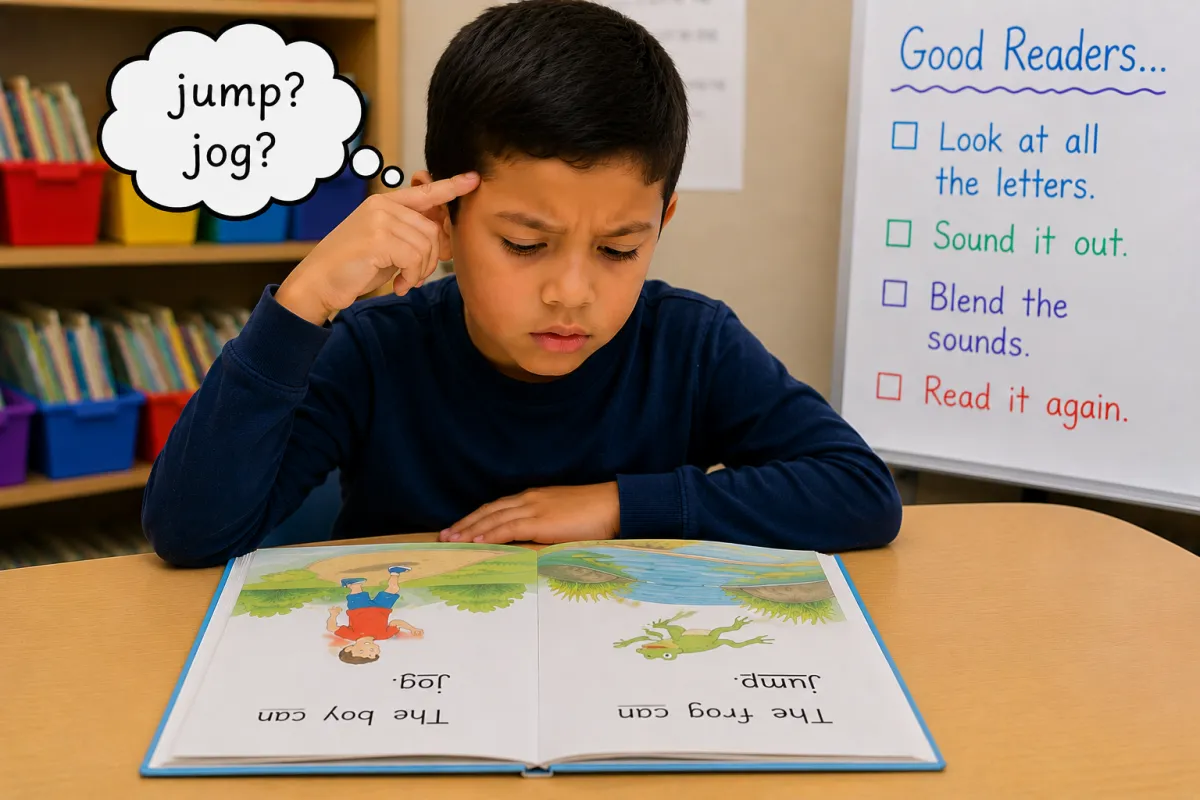
The word is jump, but the child says jog because both words start with the letter j.
The child skips an unfamiliar word and continues reading.
These responses may sometimes make sense based on the picture or the story, but they do not match the letters in the word. When children say words that are different from what the author wrote, the meaning may change, which affects comprehension.
Why Guessing Can Become a Problem for Beginning Readers
As children move through first grade and into second grade, books become more challenging. The pictures provide less support and are not provided as often. The sentences become longer, and the vocabulary that authors use becomes more complex.
A guessing strategy that may have worked occasionally in simple books often stops working as reading demands increase.
One of the goals of reading instruction is to help children become independent readers. To do that, they need to be able to read words they have never seen before. When a child relies on guessing, they often struggle when they encounter new vocabulary or more complex texts.
Decoding gives children a reliable strategy for figuring out unfamiliar words. Instead of depending on pictures, memory, or context clues, they can use what they know about letters and sounds to work through the word themselves.
Strong readers are able to read words they have never seen before because they can use their knowledge of letters, sounds, and spelling patterns to figure them out.
When children consistently guess instead of decoding, reading growth may slow because they are not building the skills needed to read unfamiliar words independently.
What Should a First Grader Do Instead?
When skilled readers come to an unfamiliar word, they don't simply take a guess.
Instead, they:
Get their mouth ready to make the first sound
Look through the entire word
Notice all of the letters
Look for patterns
Connect letters to sounds
Blend the sounds together
Check whether the word makes sense in the sentence
This process is called decoding.
Decoding allows children to read new words independently rather than relying on memory, pictures, or context clues.
All readers make mistakes. The goal is to help children develop the habit of looking carefully at the letters and using what they know about sounds and spelling patterns to solve unfamiliar words.
How Decodable Books Help Children Practice Sounding Out Words
One tool many schools use to support beginning readers is decodable books.
Unlike many books designed for beginning readers, decodable books are carefully matched to the phonics skills a child has already learned.
For example, if a child has learned short vowel sounds and simple consonant-vowel-consonant words, a decodable book might include words such as cat, sat, map, and ran. This allows children to practice applying the phonics skills they have been taught in connected text.
As a reading specialist, I often think of decodable books as practice books. Just as a child learning to play piano practices specific skills before performing a complex piece of music, beginning readers benefit from opportunities to practice newly learned phonics patterns in connected text.
When children read decodable books, they are encouraged to look carefully at the letters in a word and apply what they know about letter-sound relationships. This helps build the habit of decoding rather than guessing.
Decodable books are not intended to replace great children's literature. Instead, they provide valuable practice opportunities while children are learning foundational reading skills.
Consistent reading practice over the summer can also help children maintain and strengthen these foundational skills between school years.
When Should Parents Be Concerned?
Occasional guessing is a normal part of learning to read.
However, you may want to take a closer look if your child:
Frequently guesses at words instead of sounding them out
Relies heavily on pictures to identify words
Avoids attempting unfamiliar words
Continues to struggle with reading accuracy
Becomes frustrated when reading independently
Is making slower-than-expected progress in reading
The earlier reading difficulties are identified, the easier it is to provide targeted support.
If you're wondering whether your child's reading skills are developing as expected, you may also find my article about signs of second-grade reading readiness helpful.
How a Reading Assessment Can Help
When a child struggles with reading, it is important to understand why.
A comprehensive reading assessment can help identify strengths and areas of need in skills such as:
Phonemic awareness
Phonics
Word recognition
Fluency
Reading comprehension
Once the root cause is identified, instruction can be tailored to meet the child's specific needs.
Many children who guess at words simply need more explicit instruction and practice with foundational reading skills. With the right support, they can become more confident, accurate, and independent readers.
Frequently Asked Questions
Is it normal for first graders to guess at words?
Yes, occasional guessing does happen. However, if a child consistently relies on guessing instead of looking carefully at the letters and sounds in a word, it may be a sign that they need additional support with decoding skills.
Should I tell my child to look at the picture?
Pictures can help children understand the meaning of a story, but they should not be used as the primary strategy for figuring out unknown words. Encourage your child to look at the letters in the word first and use their phonics knowledge to sound it out.
Can decodable books help my child stop guessing?
Decodable books can be a helpful tool because they provide practice with phonics patterns a child has already learned. This encourages children to focus on the letters and sounds in words rather than relying on pictures or context clues.
When should I seek reading support for my child?
If your child frequently guesses at words, avoids sounding out unfamiliar words, becomes frustrated while reading, or is making slower-than-expected progress, a reading assessment can help identify the underlying cause and determine what support may be beneficial.
Final Thoughts
If your first grader occasionally guesses at words, there is no need to panic. Learning to read is a process, and mistakes are part of that journey.
However, when guessing becomes a child's primary reading strategy, it may be a sign that they need additional support with decoding and foundational reading skills.
The good news is that these skills can be taught.
With explicit instruction, practice, and the right reading materials, children can learn to approach unfamiliar words with confidence and develop the skills they need to become successful readers.
If you're concerned about your child's reading progress, a reading assessment can provide valuable information about where they are now and what steps may help them move forward.
Schedule your free reading assessment and parent consultation today!