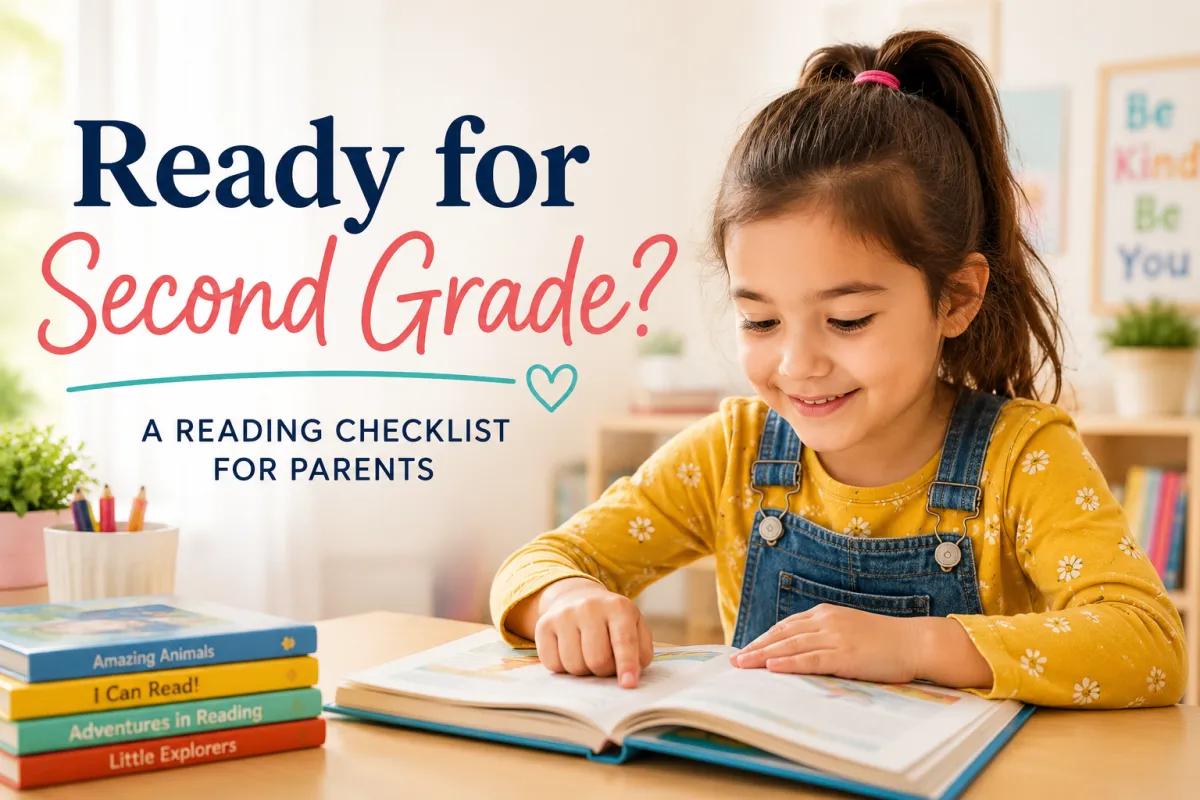
Is My Child Ready for Second Grade Reading? A Reading Checklist for Parents
One common question I hear from parents at the end of first grade is:
"Do you think my child is ready for second grade reading?"
It's a great question—and an important one. What parents are often really asking is whether their child has the reading skills needed to feel confident and successful as reading demands increase in second grade.
First grade is a year of tremendous growth. Children are expected to learn letter sounds, blend sounds into words, build a bank of sight words, read simple books, and begin understanding what they read. That's a lot to accomplish in just one school year! When I taught first grade, I was always amazed by how much growth could happen between September and June. Many children enter first grade just beginning to read and finish the year reading books independently.
As a former first-grade teacher and reading specialist, I've learned that parents are often better at spotting reading concerns than they realize. Many parents tell me things like:
"She can read, but it seems really hard."
"He knows the words one day and forgets them the next."
"I can't tell if she's where she should be."
If you've had thoughts like these, you're not alone.
If you're already noticing some concerns, you may also want to read my article on signs your child may need reading support before second grade.
The short answer is that most children who are well-prepared for second-grade reading can recognize many common words automatically, use letter sounds to figure out unfamiliar words, read simple texts with growing fluency, and understand what they read. In this article, I'll walk you through the specific signs I look for as a former first-grade teacher and reading specialist.
Can Your Child Read Many Common Words Automatically?
By the end of first grade, children should recognize many common high-frequency words automatically without needing to stop and figure them out. Through repeated exposure to words in reading and spelling, many high-frequency words become automatic and no longer require conscious effort to read. While they will continue learning new words in second grade, reading should feel increasingly effortless for many of the words they encounter in simple texts.
Now, that doesn't mean your child will know every word instantly. But reading shouldn't feel like they're figuring out every single word for the very first time.
When a child starts recognizing common words quickly, it frees up brainpower for understanding what they're reading.
What Does Your Child Do When They Get Stuck?
This is one of the biggest clues I look for when listening to a child read.
When your child comes to an unfamiliar word, do they:
look carefully at the letters?
try to sound it out?
blend the sounds together?
Or do they:
guess based on the first letter?
say a word that would make sense but doesn't match the letters?
say an incorrect word and just keep reading?
immediately ask for help?
Occasional guessing is normal. Every reader does it from time to time.
What I want to see is that a child is increasingly using the letters and sounds in the word to help them figure it out.
That's a skill they'll continue relying on throughout second grade and beyond.
Does Reading Sound Smoother Than It Did Earlier This Year?
Parents sometimes worry that their child isn't reading fast enough.
Does your child still read word by word?
Or are they starting to group words together and sound more like they're talking?
You may also hear your child's teacher talk about reading fluency. Fluency is the ability to read text accurately, at an appropriate pace, and with proper expression. Many schools measure fluency using brief reading passages and track growth throughout the year. You may hear these results compared to reading fluency benchmarks or oral reading fluency scores. While fluency scores are only one piece of the puzzle, they can provide valuable information about whether a child is making expected progress as a reader.
Reading doesn't need to sound perfect. It just shouldn't feel painfully hard all the time.
Can Your Child Tell You About What They Read?
Reading isn't just about saying the words correctly.
After your child finishes reading a book, try asking:
What happened in the story?
What was the problem?
How did it end?
If it's nonfiction, ask them to tell you about something they learned.
You might be surprised by how much these simple conversations reveal.
A child can sometimes read the words accurately but have difficulty understanding what they read. On the other hand, a child may make a few reading mistakes but still understand the story beautifully.
Both word reading and comprehension matter.
How Does Your Child Feel About Reading?
This may be one of my favorite questions.
How does your child react when it's time to read?
Do they pick up a book willingly?
Do they feel proud when they finish reading?
Or does reading often lead to frustration, tears, avoidance, or arguments?
Of course, every child has days when they'd rather do something else. That's normal.
But if reading consistently feels stressful or exhausting, it's worth paying attention to.
Children who are developing strong foundational skills generally become more confident readers over time.
What Does "On Track" Reading Look Like at the End of First Grade?
At this point, you may be wondering, "This all sounds helpful, but what does an end-of-first-grade reader actually look like?"
While every child develops at their own pace, a child who is generally prepared for second-grade reading can typically pick up a first-grade book, read it with reasonable accuracy and growing confidence, and tell you about what they read.
These are some of the signs I typically see in children who are prepared for second-grade reading.
Recognizes many common sight words automatically
Uses letter sounds to figure out unfamiliar words
Reads grade-level books with fewer stops and hesitations than earlier in the year
Can tell you about what they read
Is beginning to read with expression and attention to punctuation
A child who is ready for second-grade reading is not a perfect reader.
In fact, it is completely normal for first graders to occasionally make mistakes, self-correct, or come across words they don't know.
What I want parents to look for is progress. Reading should feel easier than it did at the beginning of first grade. If your child is becoming more accurate, more confident, and more willing to read, those are all encouraging signs.
On the other hand, if reading still feels extremely difficult, if your child is guessing at many words, or if they are working much harder than expected to get through a simple first-grade text, it may be worth taking a closer look.
If you're looking for some ways to support your child's reading before school starts, check out my article on preventing summer reading slide in first grade.
When Should Parents Pay Closer Attention?
Some signs that may indicate a child could benefit from additional support include:
Guessing at words instead of sounding them out
Difficulty blending sounds together
Reading very slowly and laboriously
Struggling to remember common sight words
Avoiding reading whenever possible
Becoming frustrated during reading activities
Difficulty understanding what they read
These signs don't necessarily mean something is wrong.
They simply suggest that it may be helpful to take a closer look at what's happening.
Frequently Asked Questions About Second Grade Reading Readiness
Should my child be reading fluently by the end of first grade?
Most children should be reading grade-level texts with growing accuracy and confidence by the end of first grade. Reading may still sound somewhat choppy at times, but it should be becoming easier and more automatic.
Is it normal for first graders to still make reading mistakes?
Yes. Even children who are ready for second grade will occasionally make mistakes, self-correct, or encounter unfamiliar words. What matters most is continued progress over time.
What if my child doesn't like reading?
Not every child loves reading, but consistent frustration, avoidance, or anxiety around reading may be signs that additional support could be helpful.
Still Not Sure if Your Child Is Ready for Second Grade Reading?
Many parents reach out to me because they have a feeling something isn't quite right, but they aren't sure what they're seeing.
A reading assessment can help identify exactly which skills are strong and which skills may need additional support.
Sometimes parents leave an assessment feeling relieved because their child is right on track. Other times, we identify specific skills that can be strengthened before reading difficulties become larger challenges.
Either way, parents walk away with a clearer picture of their child's reading development.
If you're wondering whether your child is ready for second-grade reading, I'd be happy to help.
Schedule a free reading assessment, and together we'll identify your child's strengths, discuss any concerns, and create a plan for helping them grow into a confident reader.
Schedule your FREE reading assessment and parent consultation here!