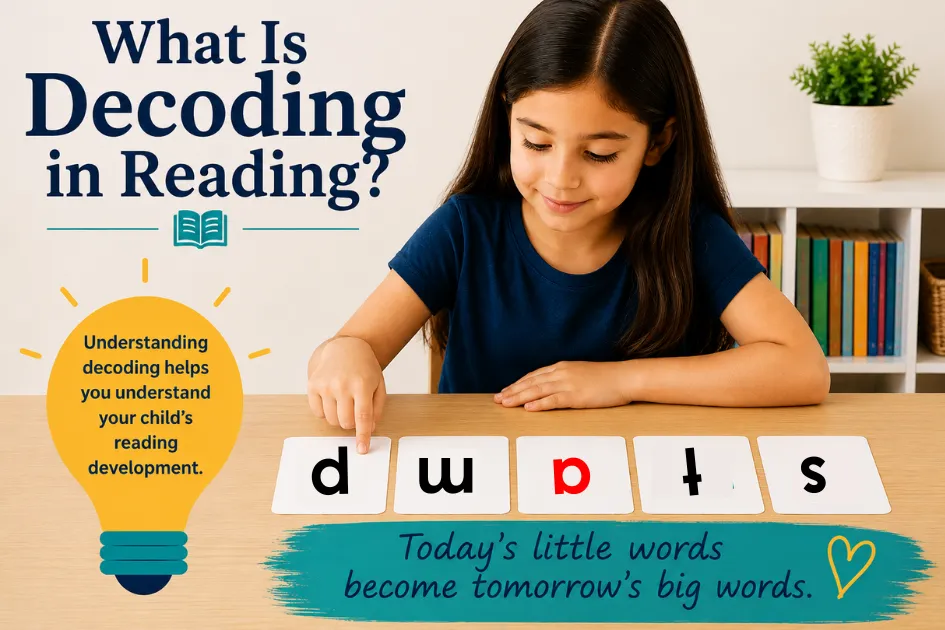
What Is Decoding in Reading? Why Strong Decoding Skills Matter
If you've ever attended a parent-teacher conference or talked with your child's teacher about reading, you may have heard the word decoding.
Perhaps the teacher mentioned that your child is making progress with decoding, needs more decoding practice, or is beginning to decode unfamiliar words.
But what exactly does that mean?
Decoding is one of the most important skills children develop as they learn to read. Understanding what decoding is—and why it matters—can help you better understand your child's reading development and see how strong decoding skills in the early years help children become confident, independent readers.
What Is Decoding in Reading?
Decoding is the ability to use knowledge of letters and sounds to read unfamiliar written words. As children learn to read, they use decoding skills to figure out unfamiliar words rather than relying on pictures, guessing, or memorizing every word they see.
For example, imagine your child comes across the word cat while reading. Rather than looking at the picture or guessing based on the first letter, they look closely at the letters, connect the letters to the sounds they represent, and blend these sounds together to read the word.
That process is called decoding.
Decoding isn't just something children do as they learn to read—it's something all readers do when they come across an unfamiliar word. Think about the last time you encountered a word you had never seen before. Chances are, you looked closely at the letters and used your knowledge of letters and sounds to figure out how to read it. That's decoding. The difference is that experienced readers do it so quickly and automatically that they often don't realize they're doing it.
Children rely on decoding as they learn to read. At first, they may carefully work through many words one sound at a time. With repeated practice, many of those words can be recognized quickly and automatically. Strong decoding skills help children become accurate, fluent, and confident readers because they have a reliable strategy for reading both familiar and unfamiliar words.
When decoding becomes easier and more automatic, children can spend less energy figuring out the words and more energy thinking about what they are reading. This allows them to focus on making sense of what they are reading, making reading a more meaningful and enjoyable experience.
Why Is Decoding So Important?
When children first learn to read, they spend a great deal of time practicing one-syllable words such as cat, jump, frog, and stamp.
Each time a child successfully decodes one of these words, they are doing much more than reading a single word correctly. They are building confidence, strengthening their decoding skills, and developing the foundation they will use to read increasingly complex words in the years ahead.
Today's little words become tomorrow's big words.
As children continue to grow as readers, they learn additional strategies for reading longer words. Rather than trying to read a long word all at once, they learn how to divide it into syllables. As they recognize common syllable patterns, they can decode one syllable at a time and then blend the syllables together to read the whole word.
For example, a child who has learned to decode shorter words is better prepared to read a word like picnic by dividing it into syllables: pic | nic. The strong decoding skills they developed while learning to read shorter words continue to support them as the words they encounter become longer and more complex.
Every word a child successfully decodes strengthens the foundation for future reading. Those early successes with one-syllable words help prepare children to read longer words, more challenging books, and increasingly complex texts with confidence.
Is Decoding the Same as Phonics?
Although decoding and phonics are closely related, they are not the same thing.
Phonics is the instruction children receive about how letters and letter combinations represent sounds.
Decoding is how children apply that knowledge to read words.
Think of it this way:
Phonics teaches the code.
Decoding uses the code.
Children first learn phonics by learning how letters and letter combinations represent sounds. They then apply that knowledge whenever they read. As their decoding skills become stronger, reading becomes more accurate, fluent, and automatic.
How Can Parents Support Decoding at Home?
Parents play an important role in helping children develop strong decoding skills. Here are a few simple ways to support your child's reading at home:
Encourage your child to look at all of the letters in a word. Remind them to look all the way through the word rather than guessing based on the first letter or a picture. If your child frequently guesses at words, you can learn more about why children guess at words while reading.
Give your child time to think. If they come to an unfamiliar word, allow them a few moments to work it out before jumping in to help.
Celebrate effort, not just accuracy. Successfully working through a challenging word helps build confidence and strengthens decoding skills, even if your child needs a little support along the way.
Read books that match your child's current reading skills. Books that are too difficult can lead to frustration, while books that match what your child is learning provide opportunities to practice successful decoding.
Remember, learning to read is a process. Every unfamiliar word your child successfully decodes is another step toward becoming a confident, independent reader.
Final Thoughts
Learning to read doesn't happen all at once. It happens one sound and one word at a time.
Each word a child successfully decodes helps build the skills they'll use to read the next word, the next book, and the increasingly complex texts they'll encounter in the years ahead.
If your child is still developing decoding skills, remember that learning to read is a journey. With explicit instruction, practice, and encouragement, children can become accurate, confident, and independent readers.
If you're concerned about your child's reading development or would like a better understanding of their current decoding skills, I'd be happy to help. A free reading assessment can identify your child's strengths, pinpoint areas where they may need additional support, and provide personalized recommendations for next steps.
Schedule your FREE reading assessment and parent consultation!