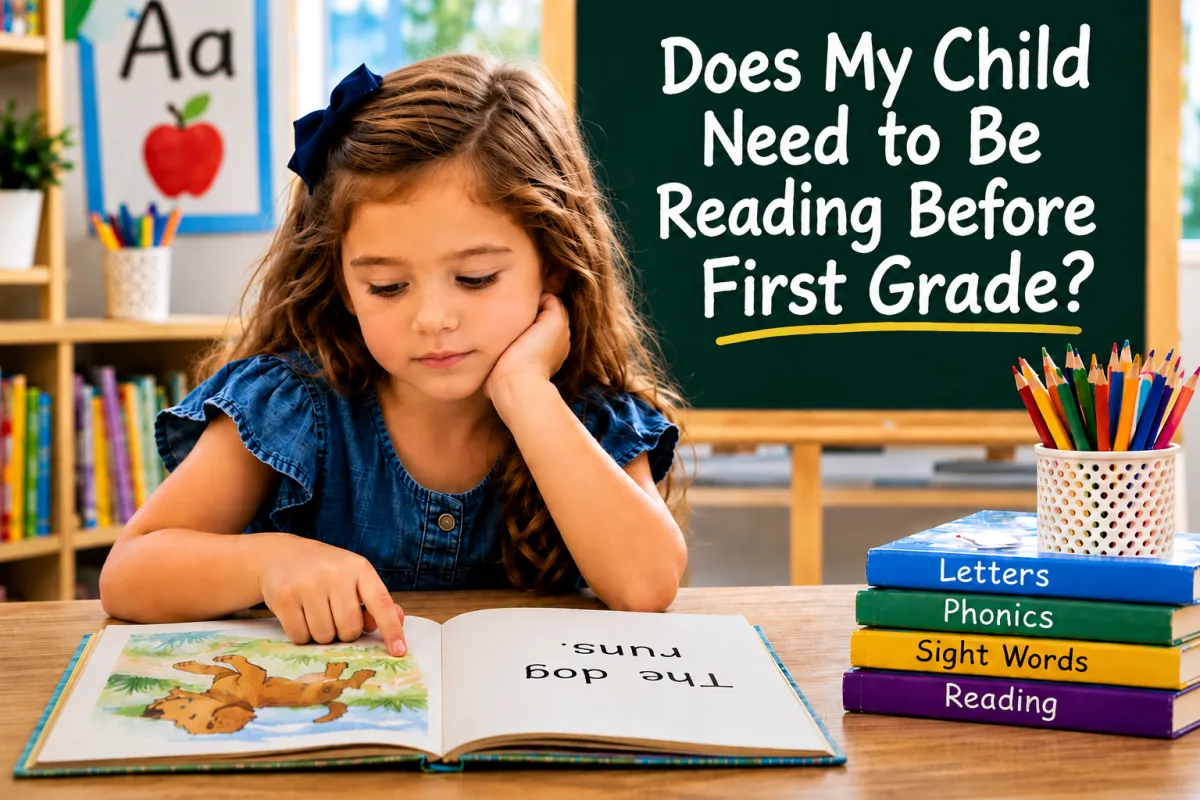
Should My Child Already Know How to Read Before First Grade?
If your child is starting first grade this fall, you may be wondering:
Should my child already know how to read?
The short answer is no—not every child is expected to know how to read before first grade begins.
It's an understandable question—one many parents begin asking after hearing about or noticing other children who seem to be reading more independently. It's natural to wonder whether your child is where they should be before first grade begins.
As a retired first-grade classroom teacher, school-wide reading specialist, and current online reading tutor, I've worked with hundreds of children in my classroom, through reading intervention, and now one-on-one with students online. Over the years, I've seen that every child brings a unique combination of strengths, challenges, and experiences to learning to read.
Every August, I welcomed children who arrived with very different reading abilities. Some were just beginning to connect letters and sounds, while others were already reading books independently. Helping each child continue growing as a reader was always the goal.
Let's take a look at what first-grade teachers generally expect, why foundational reading skills matter, and how you can support your child's reading at home.
What Do First-Grade Teachers Generally Expect?
Although expectations vary from school to school, most first-grade teachers do not expect every child to arrive already reading books independently.
Instead, they expect children to come to first grade with a foundation that they can continue building throughout the year.
For many children, that foundation includes recognizing most letters, knowing many letter sounds, understanding that print carries meaning, enjoying books, developing phonological awareness, and reading some common kindergarten high-frequency words. Some children will already be blending simple words and reading beginner books, while others will still be developing these skills.
That's exactly what first grade is for.
Throughout first grade, children continue developing the knowledge and skills they need to become successful readers. They build stronger phonics skills, become more accurate and fluent readers, expand their vocabulary, and deepen their understanding of what they read. As these skills come together, children become increasingly confident and independent readers.
What Foundational Reading Skills Should My Child Be Developing?
Children don't become readers overnight. Before they can read books independently, they first develop a set of foundational reading skills that support learning to read.
These skills begin developing long before children become fluent readers and continue growing throughout kindergarten and first grade. Together, they provide the foundation children build on as they become more accurate, confident, and independent readers.
Some of the most important foundational reading skills include:
Phonological awareness – hearing and working with the sounds in spoken words, such as rhyming, identifying syllables, and hearing the individual sounds in words.
Letter knowledge – recognizing both uppercase and lowercase letters.
Letter-sound knowledge – understanding which sounds letters represent.
Beginning phonics skills – using letter-sound knowledge to blend sounds together to read words and segment spoken words into individual sounds for spelling.
High-frequency words - recognizing many of the common words introduced in kindergarten.
Print concepts – understanding how books and print work, such as reading from left to right and recognizing that words are made up of letters.
Oral language and vocabulary – developing the language and word knowledge that support both reading and comprehension.
These skills matter because learning to read is different from learning to speak. Most children naturally learn spoken language simply by interacting with the people around them. Learning to read, however, requires children to understand how spoken language connects to printed words. As these foundational skills become stronger, reading becomes easier, more accurate, and more meaningful.
A child doesn't need to have every one of these skills fully mastered before the first day of school. First grade is where many of these abilities continue to grow through high-quality reading instruction. The important thing is that children are developing the foundation that will support their future reading success.
Want to learn more? Read my article, How Do Children Learn to Read? to discover how the five essential components of reading work together to help children become successful readers.
How Can I Support My Child Before First Grade?
The weeks before first grade don't need to be filled with flashcards, workbooks, or long practice sessions. In fact, some of the most valuable learning happens through short, enjoyable activities that help build language and early reading skills.
One of the best things you can do is read with your child every day. As you read together, talk about the story, discuss new vocabulary, ask questions, and encourage your child to make predictions about what might happen next. These conversations build vocabulary, language, and comprehension while helping your child develop a love of reading.
You can also support early reading skills by playing simple word games. Clap the syllables in words, think of words that rhyme, identify the first sound you hear in a word, or practice blending sounds together to make simple words. These playful activities strengthen phonological awareness, one of the most important foundations for learning to read.
If your child is learning letter names and sounds, look for opportunities to practice them naturally throughout the day. Point out letters on signs, cereal boxes, or in books, and talk about the sounds they represent. Short, consistent practice is often more effective than long practice sessions.
Most importantly, remember that children develop at different rates. Your goal isn't to teach everything your child will learn in first grade. It's to provide encouragement, meaningful reading experiences, and opportunities to continue building the foundational skills that support reading success.
If you're looking for more ideas, you may also enjoy my article, How to Help a First Grader Learn to Read at Home, where I share simple, research-based activities families can use to support reading development.
When Should I Be Concerned?
Every child develops at their own pace, and it's completely normal for children to begin first grade with different reading abilities. However, if your child continues to struggle with foundational reading skills after receiving consistent, evidence-based reading instruction, it may be worth taking a closer look.
Some signs that a child may benefit from additional support include:
Difficulty recognizing letter names and sounds.
Trouble hearing or working with the sounds in spoken words, such as rhyming or identifying beginning sounds.
Difficulty blending sounds together to read simple words.
Difficulty recognizing many of the high-frequency words they have been taught.
Frustration or avoidance during reading activities.
Little progress in reading over time despite regular instruction and practice.
Had a kindergarten teacher who expressed concerns about their early reading development.
These signs don't necessarily mean your child will always struggle with reading. They simply suggest that your child may benefit from additional support to help build the skills needed for successful reading.
If you have concerns, start by talking with your child's teacher. They can share how your child is progressing in the classroom and whether additional support may be helpful. An early reading assessment can also provide valuable information about your child's strengths, areas of need, and the next steps that will best support their growth.
The earlier reading difficulties are identified, the easier they are often to address. With evidence-based instruction and timely support, most children can make excellent progress and become confident, successful readers.
Final Thoughts
The beginning of first grade is an exciting milestone, and it's natural to wonder whether your child is ready.
Every child begins first grade with a different set of strengths and skills. What matters most is that your child continues building the foundation that will support successful reading as they grow.
If you ever have questions about your child's reading development, don't hesitate to reach out to your child's teacher or a reading specialist. Early guidance can provide peace of mind and help ensure your child receives the support they need to thrive.
Have questions about your child's reading?
If you're still wondering whether your child is ready for first grade or how they're progressing as a reader, a reading assessment can provide answers.
During the assessment, we'll take a close look at your child's reading skills. I'll identify strengths, pinpoint areas that may need additional support, and provide personalized recommendations for the next steps. For some children, that may simply mean continuing what you're already doing at home. For others, additional instruction or tutoring may be beneficial.
My goal is to help you better understand your child's reading development so you can move forward with clarity and confidence.
Schedule your free Reading Assessment & Parent Consultation today.