What Is Phonics? A Parent's Guide to One of the Most Important Reading Skills
If your child is learning to read, you've probably heard the word phonics. Maybe your child's teacher has mentioned it during a conference, you've seen it in a school newsletter, or you've come across it while searching for ways to support your child at home.
But what exactly is phonics?
Is it simply learning letter sounds? Is it sounding out words? And why is phonics considered such an important part of learning to read?
As a retired elementary school teacher, reading specialist, and current reading tutor, I've heard these questions from many parents over the years. Phonics can seem confusing at first, especially with so many reading terms being used today. But once you understand what phonics is and how it supports learning to read, it becomes much easier to understand your child's reading journey.
Let's take a look at what phonics is, why it's considered such an important part of learning to read, and how it helps children become confident readers.
What Is Phonics?
Phonics helps children understand the relationship between spoken language and written language. Children learn how the sounds in spoken words connect to letters and groups of letters in print. They use this knowledge to read words and to spell them.
For example, children learn that the sound /m/ can be represented by the letter m, that the sound /sh/ can be represented by the letters sh, and that the long /ō/ sound can be represented by the letters oa in a word like boat.
Rather than memorizing every word they see, children learn to apply these sound-letter relationships to figure out unfamiliar words. This gives them a reliable way to read new words with increasing accuracy and confidence.
How Is Phonics Different from Phonemic Awareness?
Although phonics and phonemic awareness are closely related, they are not the same thing.
Phonemic awareness is the ability to hear and work with the individual sounds in spoken words. It is an auditory skill, which means children can practice phonemic awareness without looking at any letters or printed words.
Phonics builds on this foundation by connecting those sounds to letters and groups of letters in print. Children use this knowledge to read words and spell them.
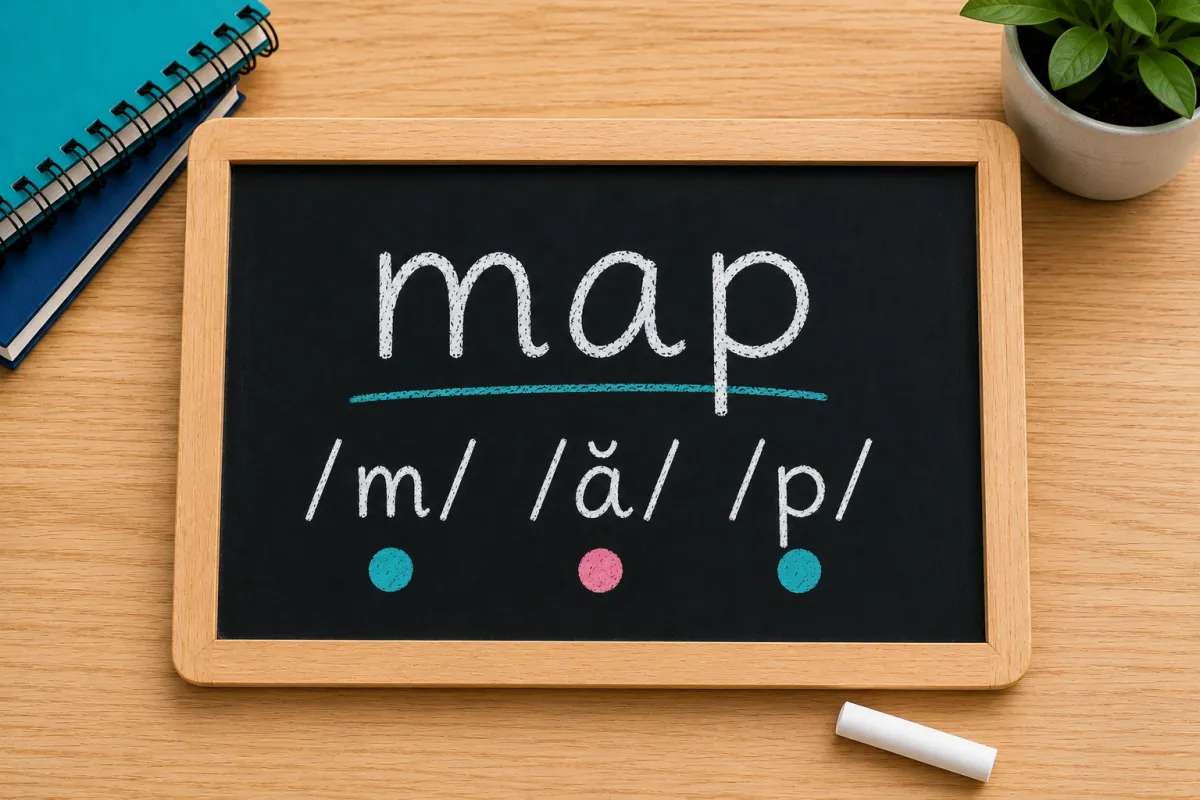
For example, a child using phonemic awareness can hear that the word map is made up of the sounds /m/ /ă/ /p/. When that same child connects those sounds to the letters m-a-p to read or spell the word, phonics is involved.
If you'd like to learn more about this important early reading skill, be sure to read What Is Phonemic Awareness?
Is Phonics the Same as Decoding?
Like phonemic awareness, decoding is closely connected to phonics, but it isn't the same thing.
Phonics is the knowledge that letters and groups of letters represent the sounds in spoken language.
Decoding is the process of using that knowledge to read unfamiliar words.
For example, a child who knows that the letter m represents the /m/ sound, the letter a represents the /ă/ sound, and the letter p represents the /p/ sound can blend those sounds together to read the word map. That process is called decoding.
To learn more about how children use phonics knowledge to read unfamiliar words, read What Is Decoding in Reading?
Why Is Phonics Important?
As children learn more sound-letter relationships, they become better equipped to read words they have never seen before. Instead of relying on pictures, guessing based on the first letter, or memorizing every word, they learn to look carefully at all the letters in a word and use what they know about letter-sound relationships to figure it out.
For example, if a child knows the sounds represented by the letters s, t, o, and p, they can use that knowledge to read the word stop. As they continue learning more spelling patterns, they become able to read increasingly complex words.
Over time, this process becomes more automatic. As children continue to apply phonics skills while reading, they begin recognizing many words quickly and accurately, allowing them to focus more of their attention on understanding what they are reading.
What Does Phonics Instruction Look Like?
Effective phonics instruction is explicit and systematic. This means children are directly taught sound-letter relationships in a planned sequence, with each new skill building on what they have already learned.
During phonics instruction, children practice reading and spelling words with the patterns they are learning. They also apply these skills while reading connected text, helping them build accuracy, confidence, and fluency over time.
As children become more skilled readers, they continue learning more advanced spelling patterns and how to apply them when reading and writing longer words.
How Can I Help My Child with Phonics?
You don't need to be a phonics expert to support your child's reading at home. One of the best things you can do is read with your child regularly and have your child read to you. If you're unsure which phonics skills your child is learning in school, don't hesitate to ask your child's teacher which letter-sound relationships or spelling patterns they're currently learning.
If your child gets stuck on an unfamiliar word, give them time to think before jumping in to help. Encourage them to look carefully at all the letters and read all the way through the word instead of guessing. If they're having trouble getting started, you might remind them to "get your mouth ready" for the first sound. Small prompts like these encourage children to apply the phonics skills they are learning while building confidence and independence as readers.
Final Thoughts
Phonics is one of the essential components of learning to read. As children learn how letters and letter combinations represent the sounds in spoken words, they gain the tools to read unfamiliar words with increasing accuracy, confidence, and independence.
Every child develops reading skills at their own pace. Understanding how phonics works can make it easier to support your child and have informed conversations with their teacher.
If you're concerned about your child's reading progress or would like a better understanding of their current skills, a reading assessment can help identify strengths, areas for growth, and the next steps to support their reading development.